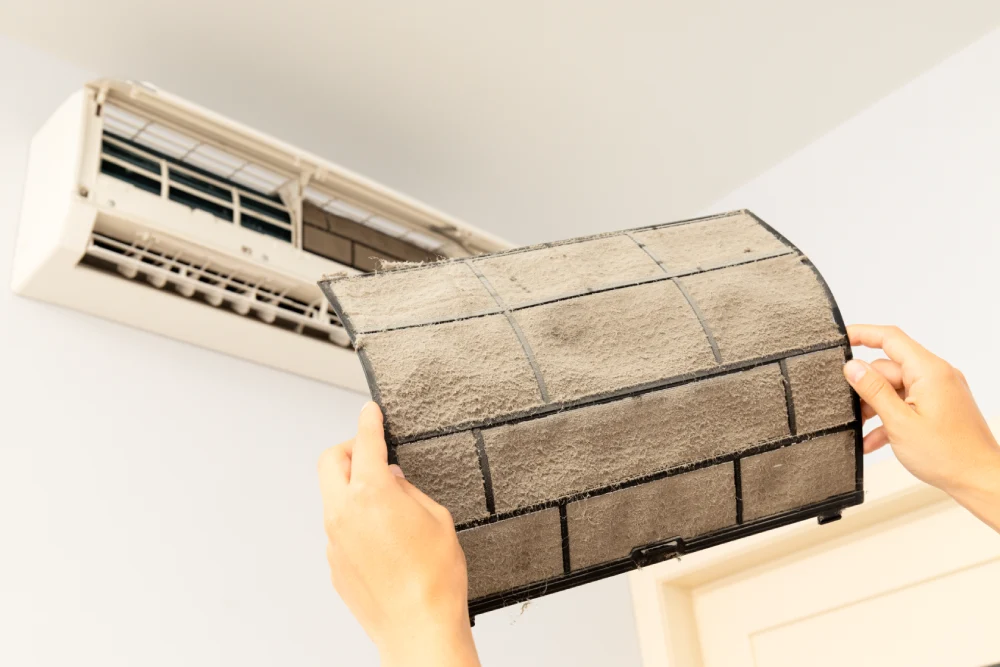
furnace filter replacement: is one of those home tasks that seems small but controls more than most people realize. It affects how warm the house feels, how clean the air smells, and how much the energy bill climbs each month. Ignore it, and the system slowly struggles. Stay consistent with it, and the furnace runs smoothly for years.
A heating system depends on airflow. When air moves freely, the furnace works efficiently. When airflow is blocked, problems begin quietly and grow over time.
This guide explains clearly when to replace furnace filter, why it matters, and how to replace furnace filter the correct way without confusion.
Why the Filter Matters So Much
The furnace pulls air in, heats it, and pushes it back through the house. Before that air enters the system, it passes through a filter.
That filter catches:
- Dust
- Pollen
- Pet hair
- Fabric fibers
- Small airborne debris
Without it, those particles circulate through every room. Over time, this lowers indoor air quality and increases dust buildup across furniture and floors.
A clean filter supports strong furnace airflow. A blocked filter slows everything down.
What a Dirty Filter Really Does
A dirty furnace filter does not just look dusty. It changes how the entire heating system behaves.
Air struggles to pass through. The furnace runs longer to reach the same temperature. Internal parts heat up more than they should. Energy consumption increases.
A clogged furnace filter can even trigger safety shutoffs. That means no heat during cold weather until the issue is fixed.
The solution is simple. Regular furnace filter replacement prevents this chain reaction.
When to Replace Furnace Filter
One of the most searched questions is when to replace furnace filter. The answer depends on daily living conditions inside the home.
Here is a practical guide:
| Home Condition | Replacement Timing |
| No pets | Every 90 days |
| One pet | Every 60 days |
| Multiple pets | Every 30 to 45 days |
| Allergies present | Every 30 to 45 days |
| Heavy winter use | Check monthly |
Understanding how often to replace furnace filter becomes easier when observing dust levels and furnace usage. If dust settles quickly or airflow feels weak, it is time.
Consistent furnace filter replacement keeps heating stable during peak winter months.
Clear Signs Replacement Is Overdue
Sometimes the calendar is not enough. The system shows warning signs.
- Rooms heat unevenly
- Furnace runs constantly
- Energy bills rise unexpectedly
- Dust builds up faster
- Air smells stale
These signs point toward overdue furnace air filter replacement.
Waiting too long increases wear on the system and reduces overall efficiency.
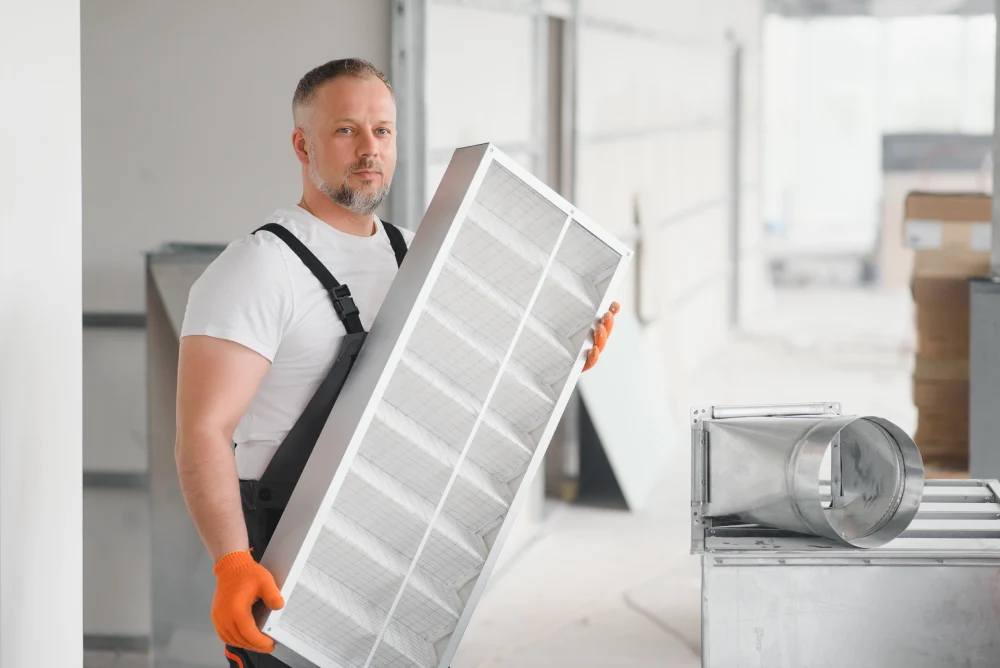
How to Replace Furnace Filter Step by Step
Many people search for how to replace furnace filter because they assume it is complicated. It is not.
Step 1: Turn Off the Furnace
Safety first. Always shut off power before opening panels.
Step 2: Find the Filter Slot
The filter is usually located:
- Behind a front access panel
- Inside the return air duct
- Near the blower compartment
Step 3: Check the Filter Size
Common sizes include:
- 20x25x5 furnace filter
- 16x25x5 air filter
The size is printed on the edge of the old filter.
Step 4: Remove the Old Filter
Slide it out carefully to avoid spreading dust.
Step 5: Insert the New Filter
Follow the arrow printed on the filter frame. It must match the direction of furnace airflow.
Step 6: Turn Power Back On
Restore power and confirm the system runs normally.
That completes furnace filter replacement in less than ten minutes.
The Link Between Filters and Indoor Air Quality
Indoor air can hold more pollutants than expected. Dust, pet dander, and microscopic particles circulate constantly.
Regular furnace filter replacement improves indoor air quality by capturing these particles before they move through vents.
For households concerned about air conditions, tools like an air quality meter help measure particle levels. Some schedule residential air quality testing or search for air quality testing near me for professional evaluation.
However, a clean filter is always the first step before any testing.
Energy Bills and System Lifespan
Restricted airflow forces the furnace to work harder. That strain increases energy use and shortens equipment lifespan.
Routine furnace filter replacement:
- Protects the blower motor
- Prevents overheating
- Reduces repair risks
- Maintains steady heating performance
Over time, this simple maintenance step saves significant money.
HVAC Filter Replacement and Year Round Care
In many homes, hvac filter replacement refers to the same filter shared by heating and cooling systems.
If the system includes central air conditioning, filters should be checked year round. Summer cooling also depends on smooth airflow.
Consistent furnace filter replacement benefits both heating and cooling performance.
Choosing the Correct Filter Size
Using the wrong filter size reduces effectiveness.
Filters such as:
- 20x25x5 furnace filter
- 16x25x5 air filter
must fit tightly inside the slot. Gaps allow dust to bypass the filter entirely. Proper sizing ensures each furnace filter replacement delivers full protection.
What About Home Air Duct Cleaning
Some homeowners consider home air duct cleaning when dust seems excessive.
Duct cleaning may help if:
- Renovation debris entered vents
- Mold growth is suspected
- Thick dust buildup is visible
But steady furnace filter replacement usually prevents major duct contamination.
Quick Maintenance Checklist
- Inspect filter monthly
- Replace before heavy buildup appears
- Keep spare filters stored
- Follow airflow arrow direction
- Set calendar reminders
Regular furnace filter replacement removes uncertainty and prevents emergency service calls during cold weather.
Conclusion:
A clean filter makes the heating system feel stronger and more balanced. Air feels lighter. Dust settles less frequently. Heating remains consistent across rooms.
Skipping furnace filter replacement may seem minor at first. Over time, it increases system strain and indoor air issues.
A small effort protects long term comfort.
Frequently Asked Questions
What is my filter’s toast?
Rooms heating all wonky, furnace humming non-stop, bills sneaking up, dust everywhere quicker than usual, or that stale basement smell? Yeah, your filter’s clogged and begging for a swap.
Why bother with this at all?
It snags all the junk like dust, pollen, pet hair, and bits floating around—keeps air cleaner, lets air flow smooth, stops overheating, saves on your power bill, and helps your furnace last way longer.
Walk me through replacing it, super easy?
Totally. Flip off the power, find the slot (usually right behind the front panel or in the air duct), eyeball the size on the old one, yank it out (don’t puff dust everywhere), slide in the new one with the arrow pointing the right way for airflow, power back on. Boom, 10 minutes max.
Where the heck is this filter hiding?
Most times, it’s behind the front door panel, in the return air duct, or by the blower fan. If you’re stumped, your furnace manual’s got the spot.
What sizes should I grab?
Common ones are 20x25x5 or 16x25x5, check the side of your old filter for the exact match. No gaps, or dust sneaks right by.
Does a grimy filter jack up my energy bill?
You bet, it chokes the airflow, so your furnace grinds harder and longer, burning more juice and maybe even shutting off on a cold night.
Can it actually clean up my indoor air?
For sure! It grabs dust bunnies, pet dander, pollen, and tiny particles before they blast out the vents, so less crud on your stuff and easier breathing.
Same deal for AC and furnace filters?
Yep, in most homes it’s one filter doing double duty for heat and cool. Check it all year if you’ve got central AC.
Still need duct cleaning if I’m on top of filters?
No, regular swaps keep things clean enough. Only call pros if reno mess got in there, mold’s lurking, or you see thick gunk inside the ducts.