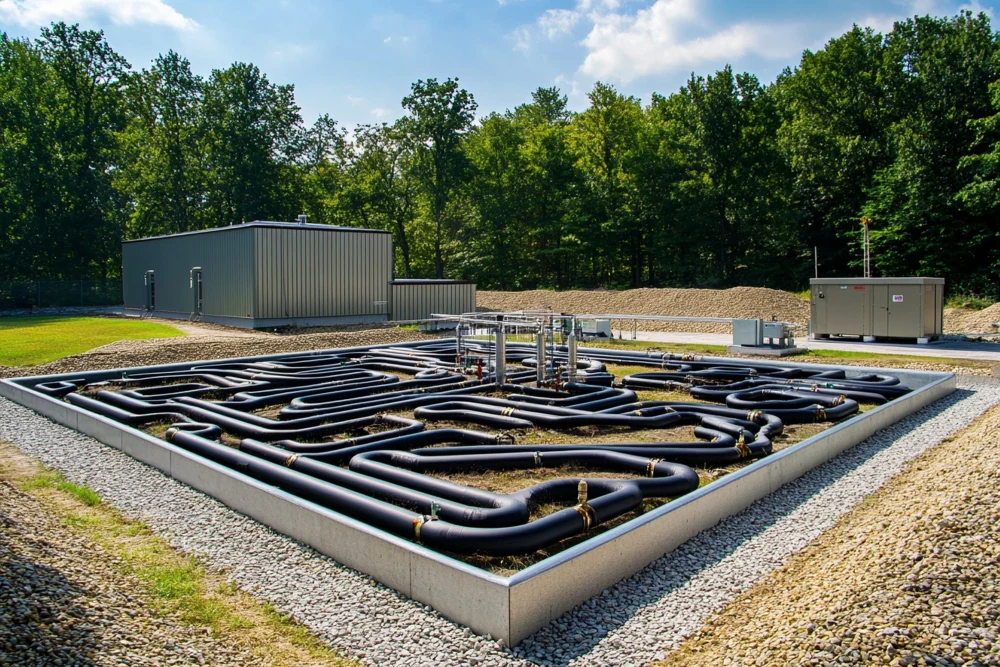
Geothermal heating keeps your home nice and toasty in winter by pulling warmth straight from deep underground. Folks love it because it saves a ton on energy bills and works great for both heating and cooling all year long.
How Does a Geothermal Heat Pump Work?
Picture this: Geothermal heat pumps grab heat from the ground, where temps stay steady around 50-60°F no matter if it’s freezing or blazing outside. Pipes buried underground, called a geothermal ground loop, carry a special fluid that soaks up that earth heat in winter and dumps extra heat back out in summer.
These systems don’t burn fuel like old furnaces. They just move heat around using a little electricity, making geothermal heating air super efficient—up to four times more than regular setups.
Kinds of Home Geothermal Systems
Not every yard fits the same setup for residential geothermal systems. Here’s a quick look at the main types:
| Type | Good For | Space Needed | Rough Cost |
| Horizontal Loop | Homes with big yards | Lots of flat land | Cheaper digs |
| Vertical Loop | Small or rocky lots | Just a few holes | More for drilling |
| Pond Loop | Near water | Lake or pond access | Uses the water |
| Open Loop | Plenty of well water | Groundwater source | Often the lowest |
Geothermal heating contractors check your land first to pick the right one.
Steps in Geothermal Heat Pump Installation
Geothermal heat pump installation means digging for those underground loops first. Big machines bore deep holes or trench across the yard—it takes a day or two.
Then hook up the indoor unit to your ducts and power. Add fluid, test everything. Whole job? About a week, but your yard might look messy for a bit.
What’s the Geothermal Heat Pump Installation Cost?
Geothermal heating isn’t cheap upfront—expect $20,000 to $40,000 for most houses on geothermal heat pump installation cost.
Break it down like this:
| Part | Average Price |
| The Pump Unit | $4,500-$9,500 |
| Geothermal ground loop Pipes | $8,000-$24,000 |
| Duct Fixes | $2,000-$8,000 |
| Permits & Labor | $1,500-$5,500 |
Good news: tax breaks knock off 30% for many. Ground source heat pump cost depends on your loop type.
Why Choose Geothermal Home Heating?
Switch to geothermal home heating and watch bills drop 25-70%. It runs super quiet with even warmth—no more chilly rooms or blasts of hot air. Plus, it’s kind to the planet. No burning gas means cleaner air, and loops last 50 years while indoor parts go 25+.
The Downsides to Think About
Geothermal heating costs a lot at first, especially if digging up a full yard. Not every spot works well—rocky ground bumps up ground source heat pump prices. It runs on electricity, so if your power comes from dirty sources, green perks shrink a bit. Talk to local pros.

Keeping Up with Geothermal Maintenance
Geothermal heat pump maintenance stays easy. Swap air filters every three months yourself. Get a pro once or twice a year to check fluid pressure and clean parts. Watch for steady 1.5-2 bar pressure in loops. Simple stuff keeps it humming for decades.
Conclusion:
A geothermal pool heater uses the same loops to warm water steady and cheap—saves half over gas heaters. Pairs perfect with your home’s geothermal heat and air setup.Geothermal repair pops up now and then. Dirty coils, clogged drains, or pump glitches? Geothermal heat pump repair sorts them quickly. Listen for odd noises early.
Frequently Asked Questions
What is geothermal heating, and why’s it better than old-school heaters?
Geothermal heating pulls steady ground warmth via buried pipes, skipping wild outdoor temps regular systems fight. Runs 3-5x more efficient, cuts huge energy use for comfy, even heat everywhere.
How much for geothermal heat pump installation in an average house?
Geothermal heat pump installation cost hits $20K-$40K total—unit, loops, ducts. Tax credits shave 30%; payback in 5-10 years from lower bills. Vertical loops pricier but space-savers.
What types of ground source heat pumps fit most homes?
Ground source heat pump options: horizontal for big yards, vertical for tight spots, pond for water edges, open for wells. Closed loops rule homes; pros match to your dirt and space.
Does geothermal heating really pay off long-term for families?
Totally geothermal heating drops bills 70%, lasts 25 indoor/50 ground years, grabs rebates. Killer value in cold spots with top-notch savings and quiet runs.
How do you handle geothermal heat pump maintenance at home?
Geothermal heat pump maintenance needs pro checks 1-2x yearly: filters, pressure, leaks. DIY filter cleans every quarter keep it peak; cheap and quick for long life.
What glitches call for geothermal repair most often?
Geothermal repair tackles loop leaks, clogs, pump fails from buildup. Low pressure or weird heat? Fix manifolds, refrigerant pronto to stay efficient.
Can geothermal heat my pool without breaking the bank?
Yep, geothermal pool heater links to house loops for cheap, steady warming—50-70% less than gas. Stretches swim time clean and green.
How to pick solid geothermal heating contractors nearby?
Hunt certified geothermal heating contractors on Energy Star or AHRI sites; read reviews on loop jobs. Grab 3 bids with full yard checks.
What’s a geothermal ground loop, and why care about it?
A geothermal ground loop hides pipes underground to swap heat with earth—powers geothermal heating magic. Right size means max savings all seasons.
Does geothermal handle both home heating and cooling fine?
Sure does—geothermal heat and air flips modes for winter warmth or summer chill, dries air too. One box does geothermal home heating and AC smooth.